
Best IELTS Coaching Institute in Kerala
Prepare for IELTS Academic, General Training, UKVI and Life Skills with expert trainers, module-wise practice, writing correction, speaking sessions, mock tests and band score improvement support.
Category:
IELTS
Exams Covered
IELTS Academic, General Training, UKVI and Life Skills
Ideal for:
Students planning to study abroad, nurses, healthcare professionals, migration aspirants, working professionals and repeat IELTS test takers.

IELTS Coaching in Kerala for Academic and General Training
IELTS, or International English Language Testing System, is one of the most widely used English proficiency tests for study abroad, migration, work and professional registration. It assesses four skills: Listening, Reading, Writing and Speaking.
Medcity International Academy provides IELTS coaching in Kerala through online and offline classes with module-wise training, trainer support and structured preparation for different IELTS requirements.
This section is designed for learners searching for best IELTS coaching in Kerala, IELTS classes near me, online IELTS coaching, IELTS Academic coaching and IELTS General Training coaching.
What You Get in Medcity IELTS Training
Medcity International Academy provides IELTS coaching through online and offline classes which includes module-wise training, writing correction, speaking practice, computerised mock tests, reading and listening strategies, 24/7 LMS (Learning Management System) access and IELTS exam booking assistance.
New learners can also benefit from Medcity’s IELTS Free Beginners Pack, designed to help them understand the test format, modules and preparation approach before starting full training.
For students aiming for high band scores, including Band 7, Band 8 and Band 9, Medcity provides focused preparation, trainer feedback and mock test analysis. Individual results depend on current English level, attendance, practice consistency and exam performance.
Speak to an IELTS Expert
Need help choosing between IELTS Academic, General, UKVI or Life Skills? Contact Medcity for batch details, fees, timings and preparation guidance.
IELTS Scores That Reflect Focused Preparation
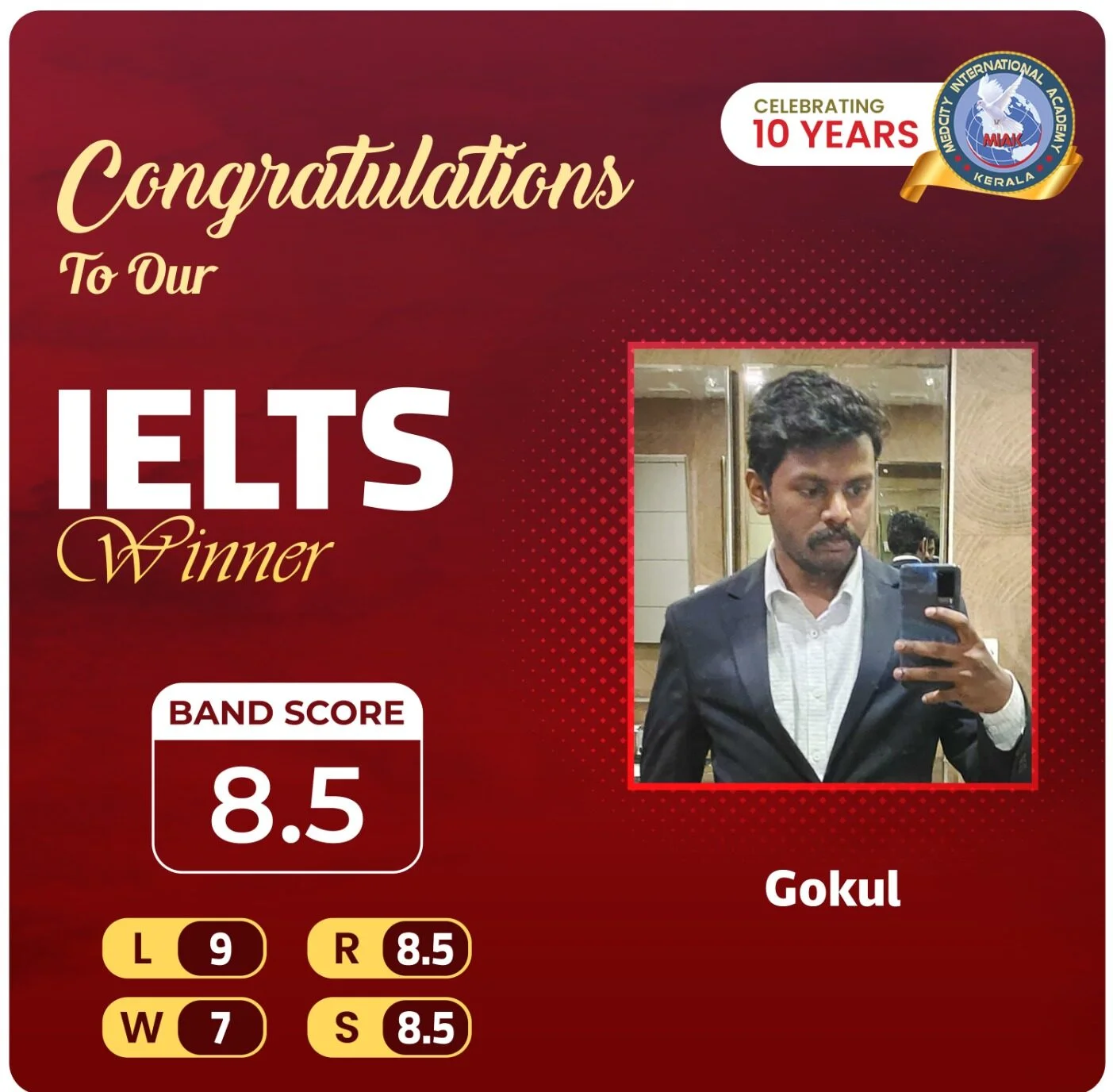
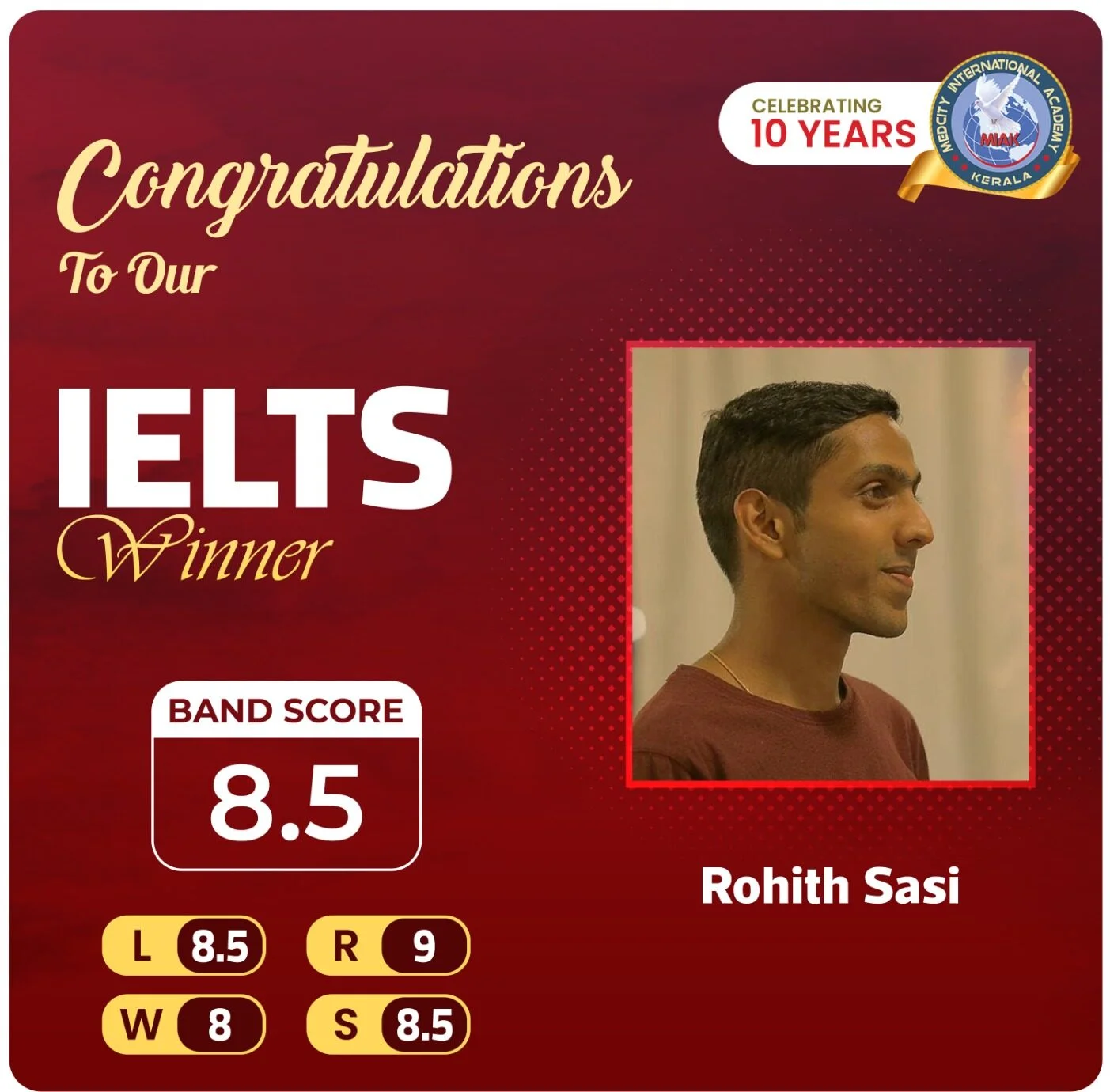
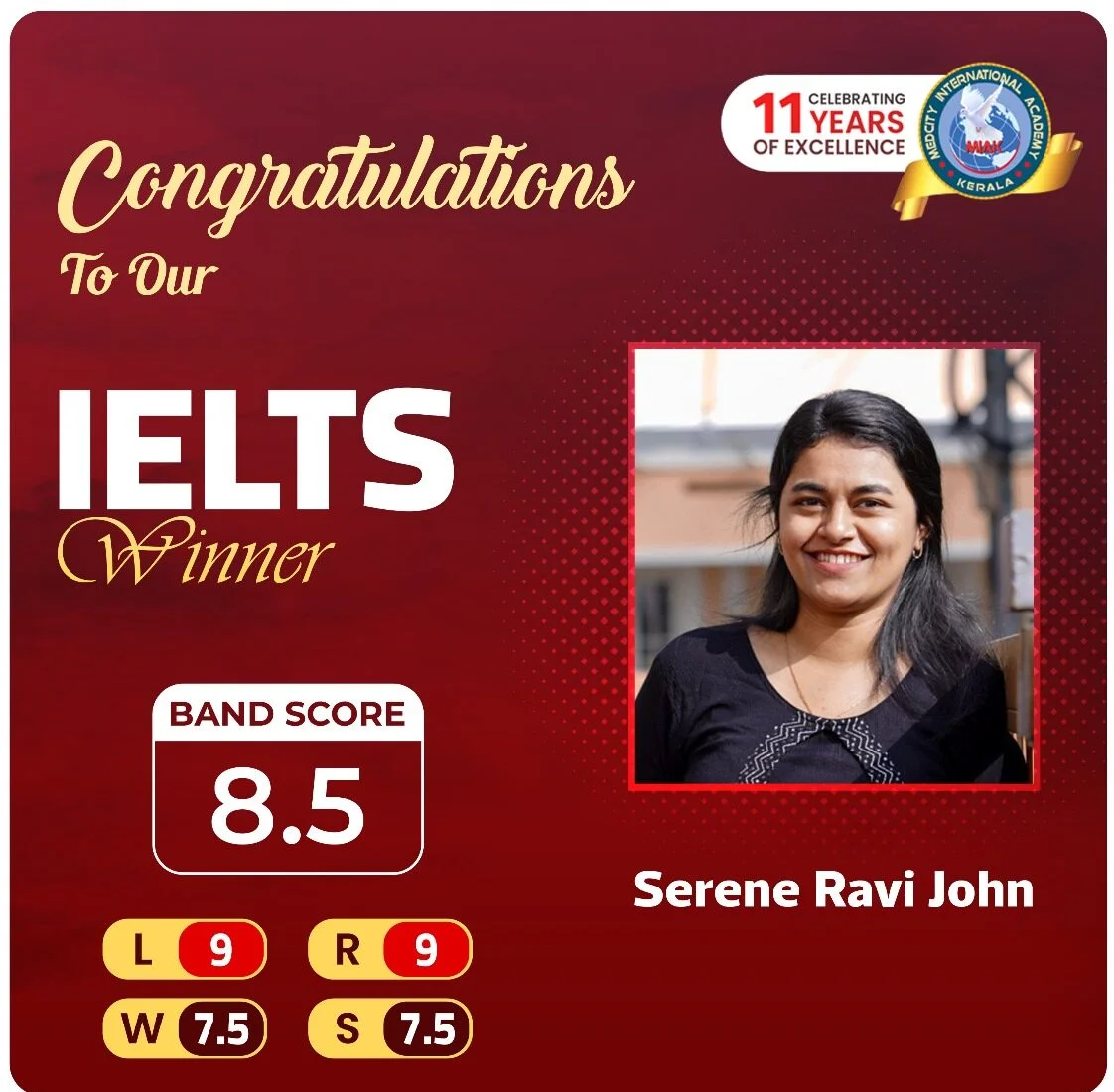
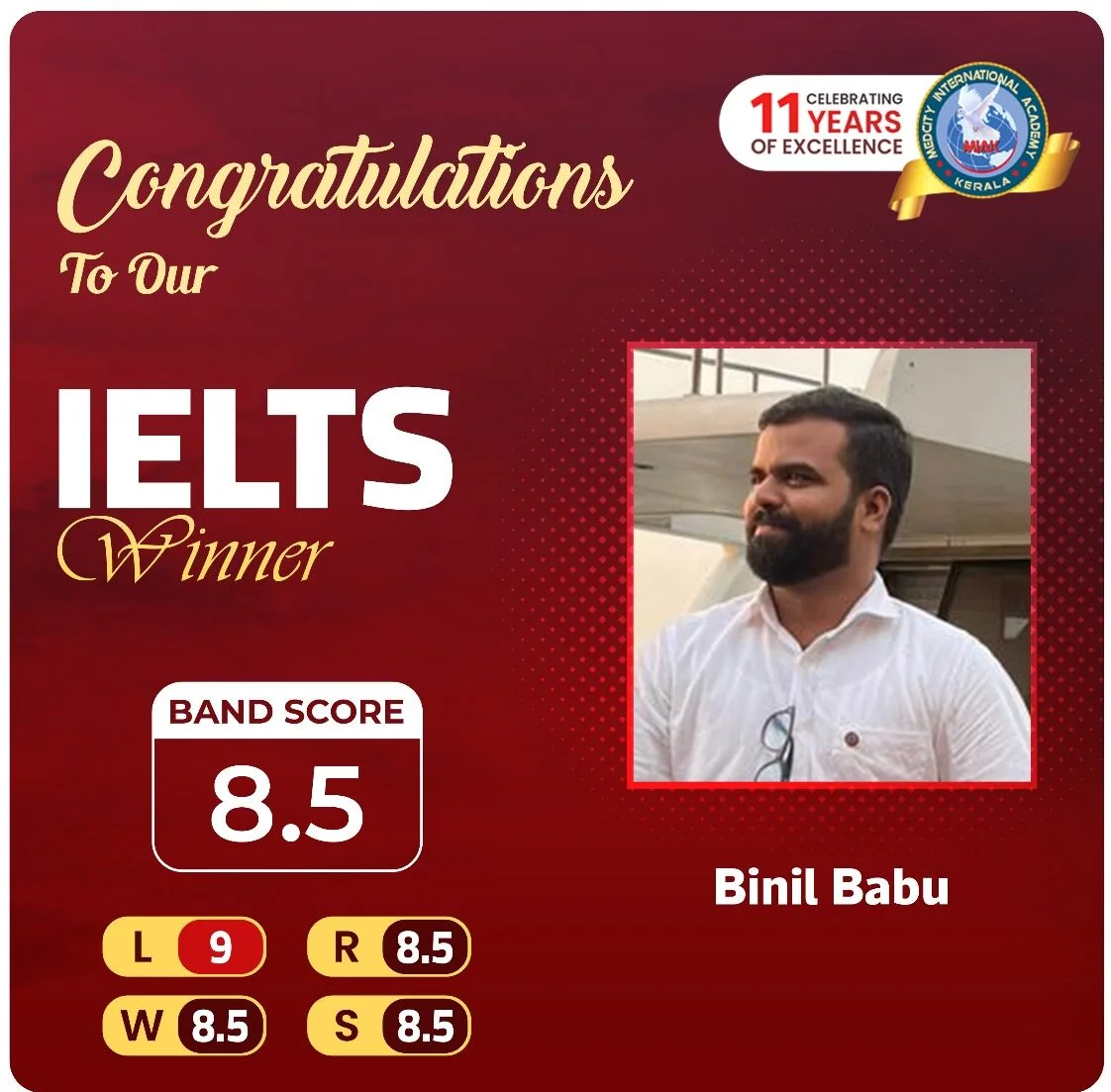
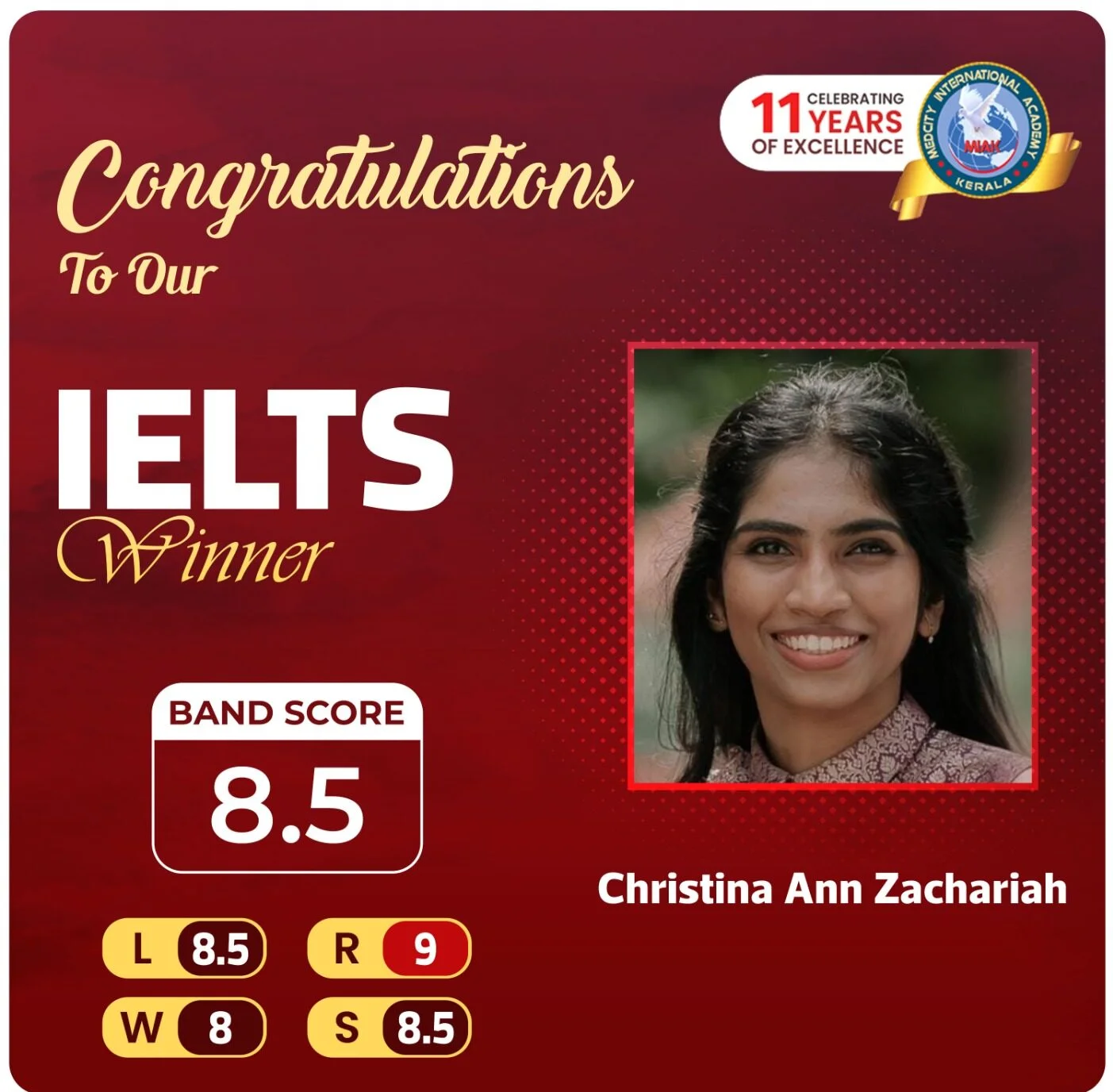
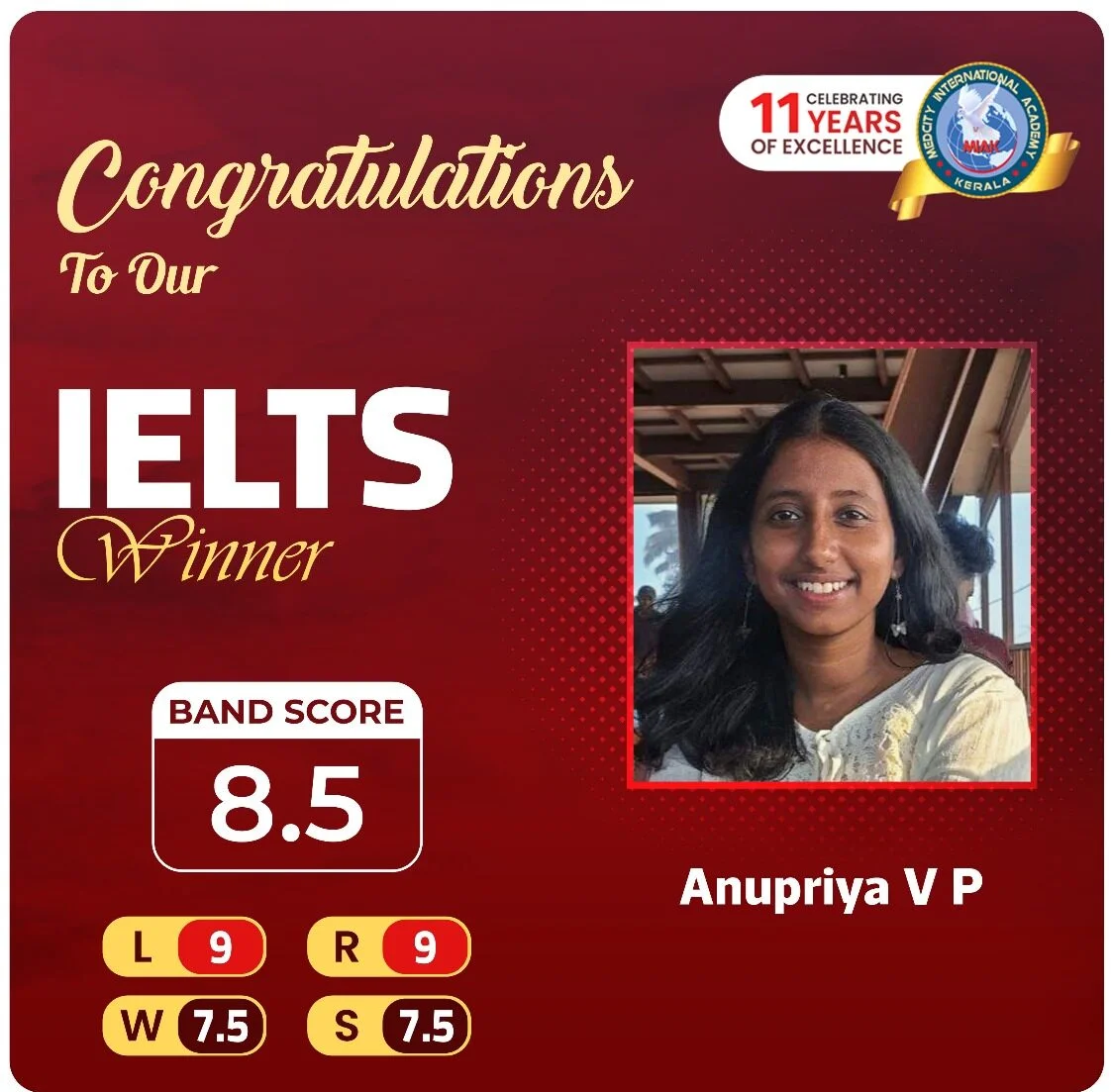
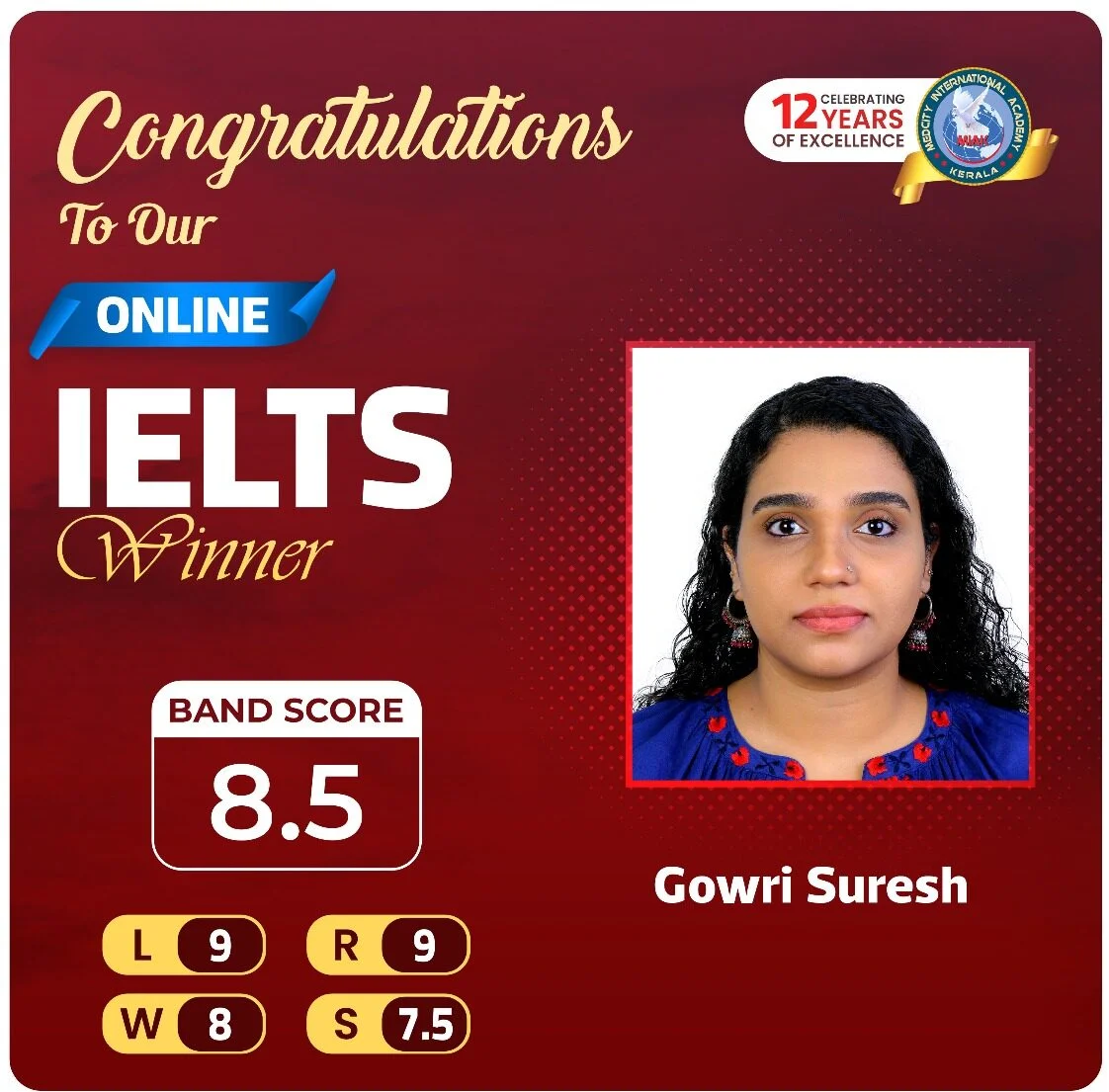
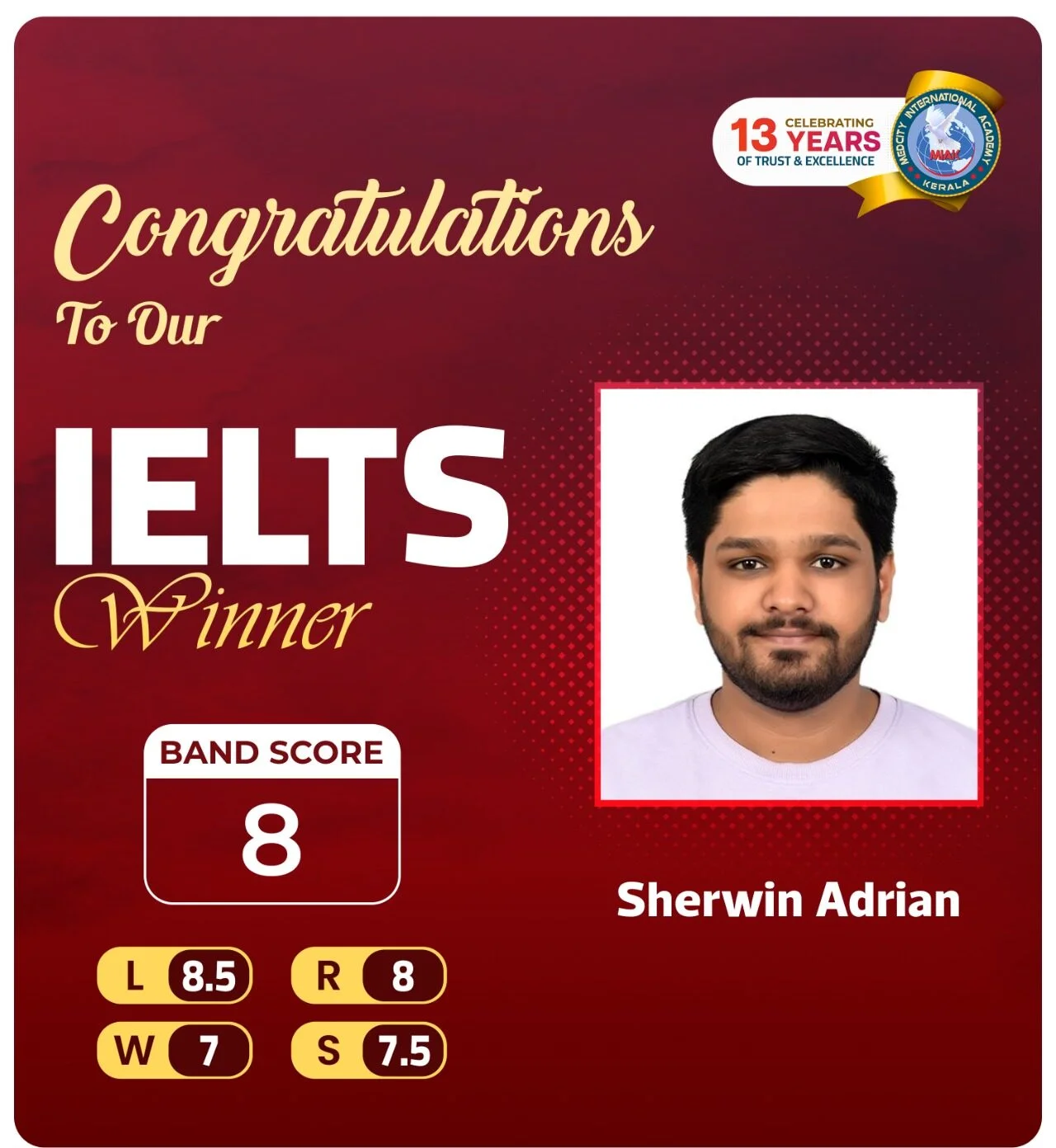
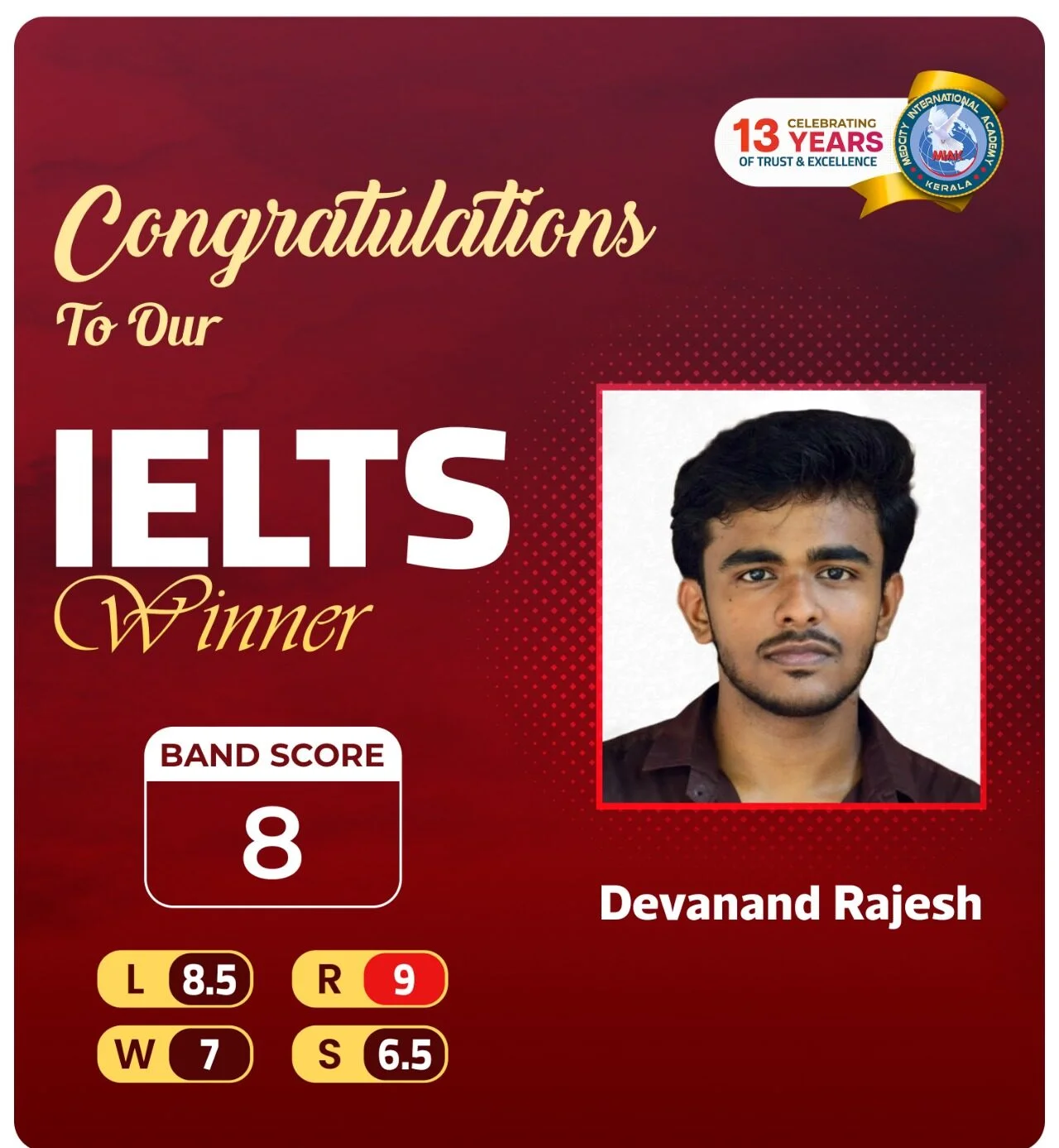
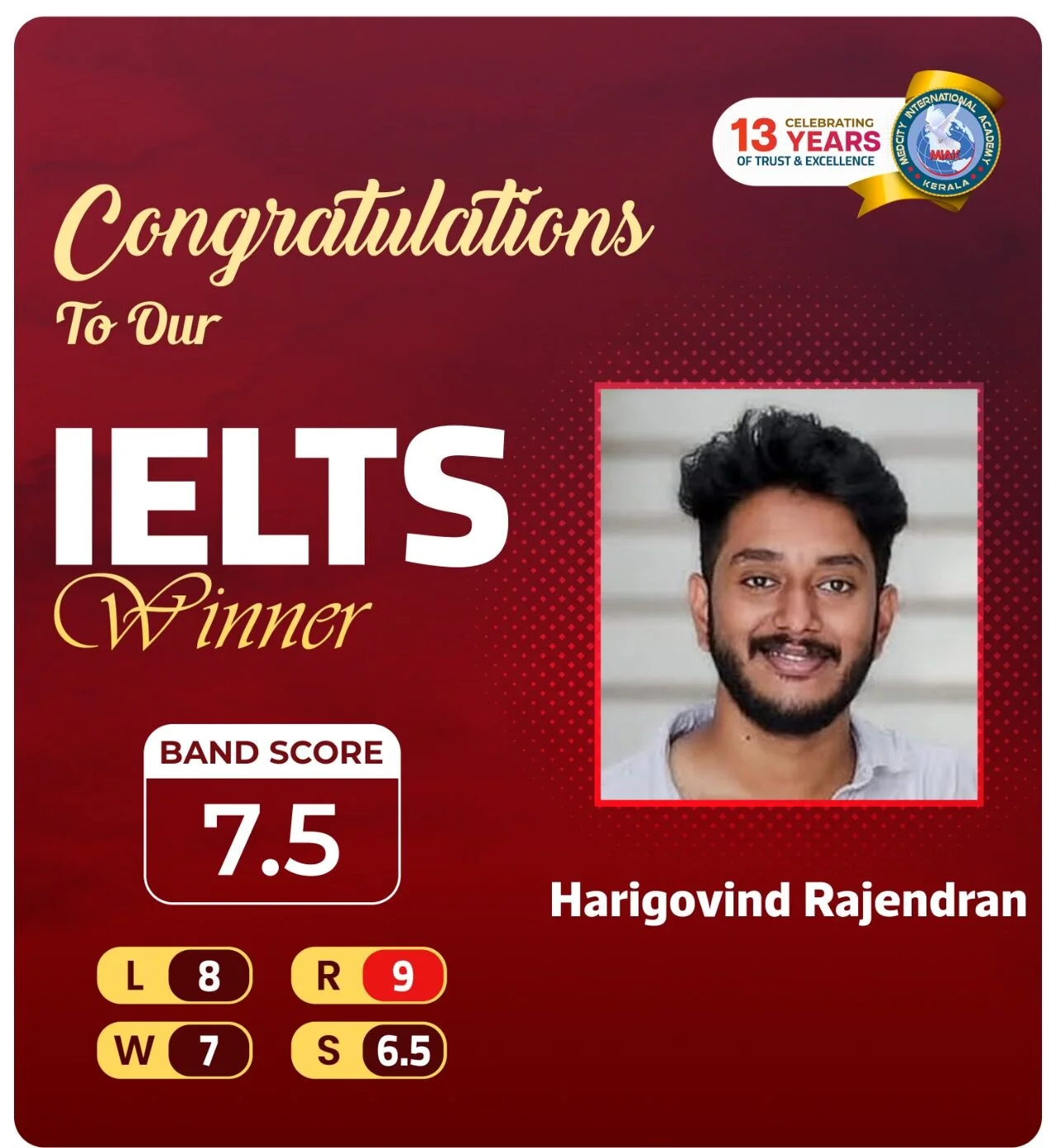
Explore IELTS student success stories from Medcity International Academy, including overall band scores and individual Listening, Reading, Writing and Speaking achievements. These results highlight the role of structured coaching, regular practice, writing correction, speaking feedback and computerised mock-test analysis.
Start Working Towards Your IELTS Target Band
Speak with a Medcity IELTS expert about Academic, General Training, UKVI or Life Skills preparation, available batches, course fees, learning modes and band-improvement support.
The scores shown are individual student achievements. IELTS results vary according to the learner’s English level, attendance, preparation, practice consistency and test-day performance.
What Is IELTS?
IELTS, or the International English Language Testing System, is an English proficiency test used for international study, migration, employment and professional registration. It evaluates a candidate’s ability to understand and communicate effectively in English.
A Globally Used English Proficiency Test
IELTS assesses English language ability through four modules: Listening, Reading, Writing and Speaking. Universities, immigration authorities, employers and professional registration bodies use IELTS scores to evaluate English-language proficiency.
Candidates usually choose between IELTS Academic and IELTS General Training based on their study, migration, employment or registration requirements.
IELTS Academic vs General Training: Which Test Should You Choose?
IELTS Academic and IELTS General Training both assess English proficiency. However, their purposes and their Reading and Writing tasks are different.
- Best for Undergraduate study, postgraduate study and university admission abroad.
- Also used for Professional registration in nursing, healthcare, medicine, engineering and other regulated professions.
- Reading Academic texts, articles, reports and analytical reading passages.
- Writing Task 1 A report based on a graph, chart, table, map or process diagram.
- Writing Task 2 A structured essay responding to an argument, issue or point of view.
- Best for Migration, permanent residency applications and employment opportunities abroad.
- Also used for Training programmes, work experience and study below degree level.
- Reading Workplace documents, notices, advertisements and general-interest texts.
- Writing Task 1 Formal, semi-formal or informal letter writing.
- Writing Task 2 A structured essay responding to a general topic, opinion or problem.
Not Sure Which IELTS Test You Need?
Speak with a Medcity IELTS expert before choosing IELTS Academic, General Training, UKVI or Life Skills. Get guidance based on your university, migration, employment or registration requirement.
Offline IELTS Coaching Across 18+ Medcity Centres
Join structured offline IELTS coaching at a Medcity International Academy centre near you. Classroom preparation includes trainer-led Listening, Reading, Writing and Speaking practice, individual feedback, writing correction, speaking sessions and computerised mock-test support.
Kannur
Chettipedika, Puzhathi, Kannur, Kerala 670004.
Kochi
Civil Line Road, Chembumukku, Ernakulam, Kerala 682021.
Trivandrum
1st Floor, Axis Tower, SS Kovil Road, Thampanoor 695001.
Kollam
3rd Floor, Arpan Tower, Prathibha Junction, Kadappakkada 691008.
Thiruvalla – KSRTC
3rd Floor, KSRTC Bus Terminal Complex, Thiruvalla 689101.
Thiruvalla
Chandrima Building, Near Cross Junction, M.C. Road, Thiruvalla 689101.
Mavelikkara
Koippallil Arcade, Puthiyakavu, Mavelikkara 690101.
Kottayam
Medcity Complex, Near Collectorate Junction, Kottayam 686002.
Kottayam – Kanjikuzhi
Kosamattam Arcade, Kanjikuzhy, Kottayam 686004.
Pala
2nd Floor, Christhuraj Grande, Opp. Kottaramattom Bus Stand, Pala 686575.
Pala – 2
Century Vee Tee Arcade, Next to Private Bus Stand, Kottaramattom, Pala 686574.
Thodupuzha
Pulimoottil Plaza, Opposite Town Church, Thodupuzha 685584.
Kattappana
Near Co-operative Hospital, New Bus Stand Road, Kattappana 685508.
Kothamangalam
PMS Building, Near Ann Theatre, Kothamangalam 686691.
Muvattupuzha
Aramana Junction, Near Grand Centre Mall, Muvattupuzha 686661.
Thrissur
Perinchery’s Building, Round North, Thrissur 680001.
Kozhikode / Calicut
Kadooli Tower, Kannur Road, West Nadakkave, Kozhikode 673011.
Mangalore
GA Complex, Near Omega Hospital, Kankanady, Mangalore.
Call the selected branch to confirm the current IELTS batch schedule, classroom timings, seat availability, course duration and fees before visiting.
IELTS Online Courses, Fees & Plans
Choose an online IELTS course based on your current English level, target band score, preferred modules and learning format. Medcity offers structured online IELTS coaching for complete preparation, module-focused improvement and individual training requirements.
Find a Plan for Your IELTS Goal
Online enrolment availablePartnered With:






Inside Our IELTS Preparation System
Our training combines interactive classes, daily speaking practice, mock tests and feedback-driven learning. Watch how we guide students through real IELTS tasks, help them build step-by-step confidence and prepare them to achieve the score their dreams demand.
IELTS Course Highlights at Medcity
Medcity International Academy offers structured IELTS Academic and General Training coaching covering Listening, Reading, Writing and Speaking. Students receive trainer-led preparation, individual correction, mock-test analysis, digital learning access and exam-related support.
IELTS Academic and General Training Support
Prepare for the correct IELTS test based on your university, migration, employment or professional registration requirement. Trainers help learners understand the differences between both test types.
IELTS Writing Task 1 and Task 2 Training
Academic learners practise reports for charts, graphs, tables, maps and process diagrams. General Training learners practise formal, semi-formal and informal letters, while both prepare for Writing Task 2 essays.
Essay Writing and Individual Correction
Improve grammar, vocabulary, structure, coherence, task response and idea development through trainer-led correction. Feedback helps students understand specific areas that may affect their Writing band score.
IELTS Speaking Practice and Feedback
Practise Speaking Part 1, cue cards and Part 3 discussion questions. Trainer feedback focuses on fluency, pronunciation, grammar, vocabulary, confidence and natural answer delivery.
IELTS Reading and Listening Strategies
Learn practical strategies including skimming, scanning, keyword identification, paraphrase recognition, prediction, note-taking, spelling accuracy and time management.
Computerised Mock Tests and Band Analysis
Practise through computerised IELTS mock tests to understand exam timing, question formats and test pressure. Mock analysis helps identify weak areas and improve test readiness.
24/7 LMS Access and Practice Support
Continue IELTS preparation beyond live sessions through Medcity’s Learning Management System, digital resources, practice materials, recorded lessons and revision support.
Online and Offline IELTS Classes
Choose live online IELTS coaching or classroom-based preparation at available Medcity centres. Course options include complete LRWS training and module-focused plans.
IELTS Exam Booking and High-Band Support
Receive guidance on IELTS exam booking, test-type selection and preparation planning. Learners targeting Band 7, Band 8, Band 8.5 or Band 9 receive focused feedback and mock-test analysis.
Build a Preparation Plan for Your IELTS Target
Speak with an IELTS expert about your current level, required test type, preferred learning mode, target band score, available batches and course fees.
Why Choose Medcity for IELTS Coaching?
Medcity combines structured IELTS training, personalised correction, exam-style practice and flexible learning support to help students prepare confidently for their required IELTS test.
Training for the Right IELTS Test
Get preparation for IELTS Academic, General Training, UKVI and Life Skills based on your study, migration, work or professional-registration requirement.
Correction-Led Writing Preparation
Receive feedback on Task 1, Task 2, essays, reports and letters. Correction focuses on grammar, vocabulary, task response, structure, coherence and areas affecting the Writing band score.
Guided IELTS Speaking Practice
Practise Speaking Part 1, cue cards and Part 3 discussions with support for fluency, pronunciation, vocabulary, grammar, idea development and confident answer delivery.
Computerised Mock Tests and Analysis
Practise under exam-style conditions to understand timing, question formats and test pressure. Performance analysis helps identify weaker areas and plan focused improvement.
LMS and Flexible Learning Support
Continue preparation beyond live classes through 24/7 LMS access, practice materials, video lessons and revision resources. New learners can also use the IELTS Free Beginners Pack.
Online and Classroom IELTS Options
Choose trainer-led online IELTS classes or classroom coaching at available Medcity branches. Students can select a learning mode based on their location, schedule and preferred support level.
IELTS results vary according to the learner’s current English level, attendance, preparation, practice consistency and performance on the test day.
Frequently Asked Questions About IELTS Coaching in Kerala
IELTS, the International English Language Testing System, is an English proficiency test used for study abroad, migration, work and professional registration. It assesses four major English skills: Listening, Reading, Writing and Speaking.
Medcity International Academy provides IELTS coaching in Kerala with module-wise training, writing correction, speaking practice, reading and listening strategies, computerized mock tests and exam booking assistance.
Medcity’s IELTS coaching is suitable for students, nurses, healthcare professionals, working professionals, migration aspirants, skilled workers and candidates planning to study, work or settle abroad.
It is also suitable for beginners, repeat test takers and students aiming for higher band scores such as Band 7, Band 8 or Band 9.
Yes. Medcity provides IELTS coaching in Kerala through online and offline class options, subject to batch and branch availability.
Students searching for IELTS coaching in Kerala, IELTS classes near me, IELTS coaching near me or IELTS training centre in Kerala can contact Medcity to check the nearest branch or suitable online batch.
Yes. Medcity provides online IELTS coaching with trainer-led classes, module-wise practice, IELTS Writing correction, IELTS Speaking practice, reading and listening strategies, computerized mock tests and 24/7 LMS access.
Medcity’s online IELTS courses start from Rs 5,000/-, depending on the selected course package and support level.
Yes. Medcity provides offline IELTS coaching through classroom batches at available Medcity branches. Offline IELTS coaching is suitable for students who prefer direct trainer interaction, classroom discipline, peer practice, speaking activities, writing correction and face-to-face doubt clarification.
Students can contact the admissions team to check the latest offline IELTS batch availability.
IELTS Academic is usually chosen by students applying for higher education or professional registration. IELTS General Training is usually chosen for migration, work experience, training programmes or study below degree level.
Listening and Speaking are the same for both IELTS Academic and IELTS General Training. Reading and Writing are different depending on the test type.
The right IELTS test depends on your purpose. Choose IELTS Academic if you are applying for university admission, higher education or professional registration. Choose IELTS General Training if your goal is migration, work experience, training programmes or below-degree-level study.
Students should always confirm the exact IELTS requirement with their university, employer, professional body, visa pathway or migration authority before booking the exam.
The IELTS exam has four modules: Listening, Reading, Writing and Speaking.
Listening and Speaking are the same for IELTS Academic and IELTS General Training. Reading and Writing differ by test type. Academic IELTS includes academic reading passages and report writing, while General Training includes everyday reading texts and letter writing.
IELTS is scored on a band scale from 0 to 9. Candidates receive individual band scores for Listening, Reading, Writing and Speaking, along with an overall band score.
The required IELTS band score depends on the country, university, employer, visa category or professional registration body.
IELTS Task 1 is the first Writing task. In IELTS Academic, Task 1 usually requires report writing based on a chart, graph, table, map or process diagram.
In IELTS General Training, Task 1 requires letter writing. Students may need to write a formal, semi-formal or informal letter.
IELTS Task 2 is an essay writing task for both IELTS Academic and IELTS General Training. Students must write a structured essay responding to a topic, opinion, argument, problem or discussion question.
Medcity provides IELTS Task 2 training with essay planning, introduction writing, body paragraph development, conclusion writing, grammar correction and vocabulary support.
Yes. Medcity provides IELTS Writing correction for Academic Task 1, General Training Task 1 and Task 2 essays.
Students receive feedback on task response, grammar, vocabulary, coherence, paragraph structure, sentence formation and band score improvement areas.
Yes. Medcity provides IELTS Speaking practice for Part 1 questions, cue cards and Part 3 discussion questions.
Trainers help students improve fluency, pronunciation, grammar accuracy, vocabulary, idea development, confidence and natural speaking style.
Yes. Medcity provides IELTS computerized mock tests to help students practise timing, test format, question types and exam conditions.
Mock tests help students identify weak areas in Listening, Reading, Writing and Speaking. Students also receive feedback and band score analysis to support improvement.
Yes. Medcity provides IELTS exam booking assistance for students who need help understanding the booking process, test type selection, exam date planning and preparation timeline.
Students should always verify final exam booking details, dates, fees and test-centre rules with the official IELTS test provider before registration.
Yes. Medcity provides an IELTS Free Beginners Pack for new learners who want to understand the test before starting full preparation.
The pack can help students understand IELTS test format, modules, question types, Task 1, Task 2, speaking, reading, listening and basic preparation strategy.
Medcity’s online IELTS courses start from Rs 5,000/-. The final IELTS course fee may vary based on course duration, batch type, trainer support, learning mode, mock test access, LMS access and selected training package.
Students can contact the Medcity admissions team for the latest IELTS course fee, payment options and batch availability.
Some students can prepare for IELTS in one month if they already have strong English skills and mainly need exam strategy, mock tests and correction.
Students who need improvement in grammar, writing structure, speaking fluency, reading speed or listening accuracy may need more time. Medcity helps learners choose a preparation plan based on their current level and target band score.
To improve your IELTS Writing score, focus on task response, paragraph structure, grammar accuracy, vocabulary, coherence, cohesion and clear idea development.
Medcity provides IELTS Writing correction for Task 1 and Task 2 so students can understand their mistakes and improve their band score step by step.
To improve your IELTS Speaking score, practise fluency, pronunciation, grammar accuracy, vocabulary range, idea expansion and natural answer delivery.
Medcity provides IELTS Speaking practice, cue card training, mock speaking interviews and trainer feedback to help students speak more confidently.
The best IELTS Reading tips are to skim the passage, scan for keywords, understand question types, identify synonyms, avoid distractors and manage time carefully.
Medcity provides timed IELTS Reading practice and error analysis for both IELTS Academic and IELTS General Training students.
Useful IELTS Listening techniques include reading questions before the audio starts, predicting answer types, listening for meaning, identifying names and numbers, watching for synonyms and checking spelling.
Medcity provides IELTS Listening practice, timed exercises, correction and feedback to improve accuracy.
Yes. Nurses may take IELTS if it is accepted for their destination country, registration pathway, visa category or professional body requirement.
Medcity provides IELTS coaching for nurses and healthcare professionals with module-wise preparation, writing correction, speaking practice and overseas pathway guidance.
IELTS, OET and PTE are different English proficiency tests. IELTS may suit students who prefer general English tasks, OET may suit healthcare professionals, and PTE may suit candidates comfortable with computer-based testing.
Medcity offers IELTS, OET and PTE training, so students can get practical guidance before choosing the right test.
Yes. Medcity helps repeat IELTS test takers by identifying weak modules, analysing previous performance and creating a focused score improvement plan.
Repeat test takers can receive support in Writing correction, Speaking practice, Reading strategies, Listening techniques, mock tests and target band planning.
You should choose Medcity for IELTS coaching if you want structured training, online and offline class options, IELTS Academic and General Training support, Task 1 and Task 2 training, Essay Writing support, computerized mock tests, exam booking assistance, 24/7 LMS access, Free Beginners Pack and personalised band score improvement guidance.
Medcity’s IELTS coaching in Kerala is suitable for students, nurses, healthcare professionals, migration aspirants, working professionals and learners preparing for study abroad, work or professional registration.
Ready to Work Towards Your IELTS Target Band?
Speak with a Medcity IELTS expert to choose the right test type, learning mode and preparation plan. Get information about IELTS Academic, General Training, UKVI, online classes, classroom batches, course fees and available timings.
IELTS results vary according to the learner’s current English level, attendance, practice consistency, preparation and performance on the test day.